If you are a business owner in Sheffield or the surrounding areas, you have likely heard rumours about the “Big Switch” or the “PSTN Switch Off.” You might be asking yourself: When is the Copper Switch Off happening, and how does it actually affect my business operations in 2026?
This article will answer that exact question. We will cut through the technical jargon to explain the new deadlines, why the date was extended, and the specific actions you need to take this year to ensure your business stays connected.
Don’t Wait! Act Now
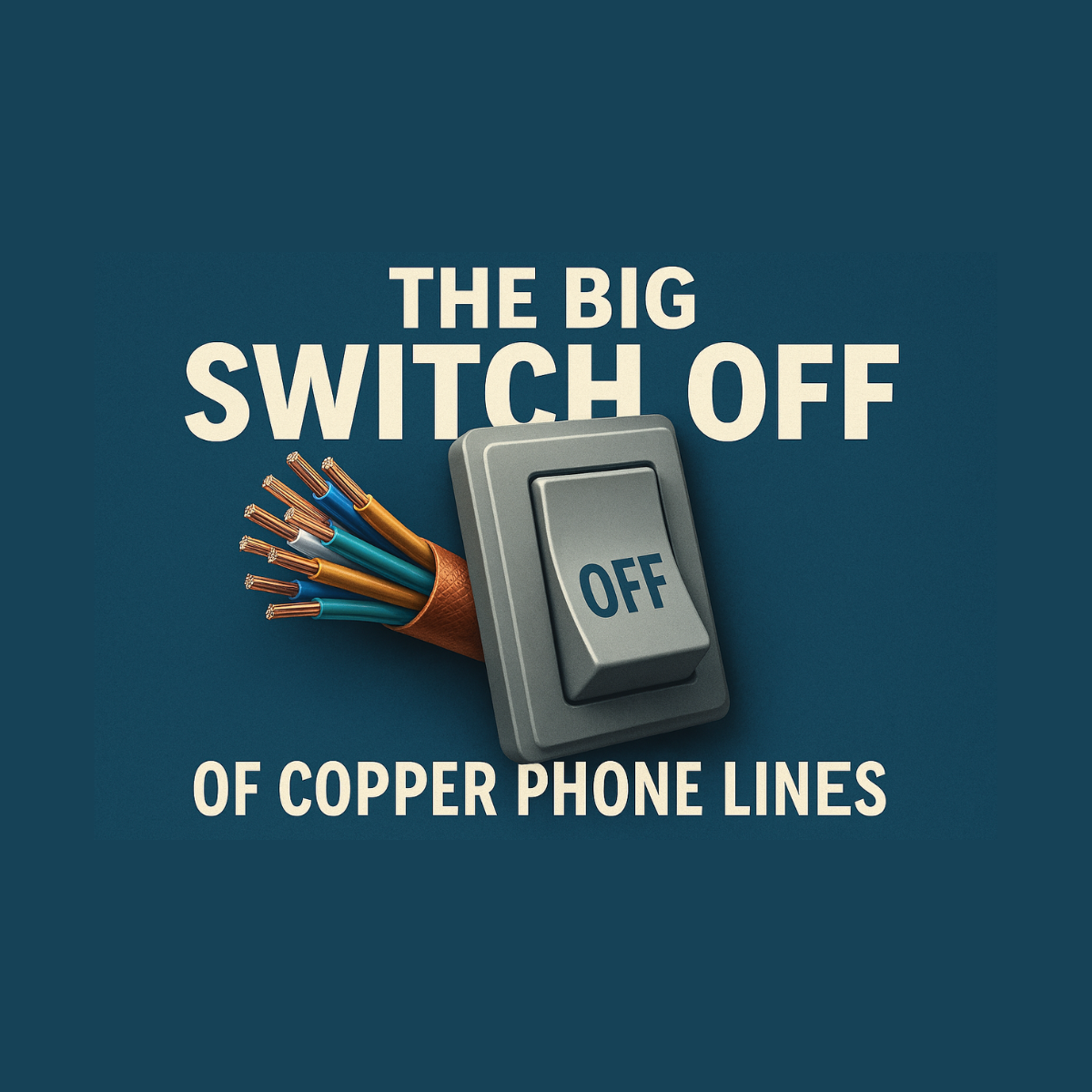
The Copper Switch Off deadline has been extended to 31 January 2027. This means the traditional copper network (PSTN and ISDN services) will be permanently retired on this date. However, 2026 is the critical year for migration. Waiting until the final deadline is a high-risk strategy that could leave your business without phone lines or internet. Sheffield SMEs must use 2026 to audit their systems, upgrade to Full Fibre or digital phone lines, and ensure all connected devices—like alarms and card machines—are compatible with All IP technology.
The Copper Switch Off in 2026
To understand why this is happening, we need to look at the infrastructure that powers our communication. For over a century, the UK has relied on the Public Switched Telephone Network (PSTN). This is the old copper network that delivers analogue phone lines and ISDN services to millions of premises.
The reality is that this network is ageing, prone to faults, and difficult to maintain. It simply cannot handle the demands of modern communication. The “Big Switch” is the industry-wide move to replace this legacy infrastructure with digital services that run over the internet, known as Voice over Internet Protocol (VoIP) or “All IP.”
Why Was the Deadline Extended?
Originally, the aim was to complete the switch off by December 2025. However, telecoms providers and Openreach recognised that many vulnerable customers and businesses with complex setups needed more time.
The deadline was pushed to January 2027 to ensure a safe and smooth transition for everyone. This extension is not a reason to relax; it is a grace period to get your house in order. The industry is already in a “Stop Sell” phase, meaning you can no longer buy new analogue phone lines or ISDN services in most areas.
The 2026 Timeline for Sheffield Businesses
While the final cut-off is in early 2027, the practical work must happen in 2026. Here is why:
- Supply Chain Pressures: As we get closer to the deadline, demand for digital phone system hardware and engineer appointments will skyrocket.
- Number Porting Delays: Moving your existing phone numbers from the old copper network to a new VoIP provider can take up to 30 days. In a rush, this process can fail, risking the loss of your business numbers.
- Complex Migrations: If you have lift lines, intruder alarms, or older PBX systems, you need time to test digital alternatives before the old lines are killed.
Who Is Affected?
Every business that uses a traditional phone line is affected. This includes:
- Analogue Phone Lines: Standard single lines used for voice, fax machines, or broadband.
- ISDN Services: Digital lines often used by larger offices for their on-premise phone system.
- Non-Voice Services: Alarms, payment terminals, door entry systems, and lift emergency phones that plug into a wall socket.
If you rely on any of these legacy systems, you must migrate to a digital service.
Comparisons and Alternatives: Choosing Your Digital Path
When moving away from the copper network, businesses generally have two main paths for their voice calls: Hosted VoIP or SIP Trunking. The right choice depends on your current setup and future needs.
Hosted VoIP vs. SIP Trunking
Hosted VoIP (Cloud Phone System)
This is the most popular choice for modern SMEs. With Hosted VoIP, your entire phone system lives in the cloud (data centres). You do not need expensive hardware in your office cupboard.
- Best for: Businesses wanting flexibility, remote work capabilities, and lower upfront costs.
- Pros: Easy to scale (add or remove users instantly), features like mobile apps and call recording included, and no maintenance costs for physical PBX boxes.
- Cons: Rely entirely on your internet connection quality.
SIP Trunking
If you have invested heavily in a modern on-premise PBX that is not yet end-of-life, SIP Trunking allows you to keep that hardware. It replaces your ISDN lines with a digital connection that routes calls over the internet.
- Best for: Larger organisations with specific on-site hardware requirements or recent PBX investments.
- Pros: Retain existing handsets and internal infrastructure while moving external lines to digital.
- Cons: You are still responsible for maintaining the physical PBX hardware, which may eventually become obsolete.
Full Fibre vs. Leased Lines
Your digital phone line is only as reliable as your internet connection. The switch off is driving a massive upgrade to broadband infrastructure.
Full Fibre (FTTP)
Fibre to the Premises (FTTP) uses fibre optic cables all the way from the exchange to your building. It eliminates the copper “last mile” that slows down standard broadband.
- Verdict: Essential for most small businesses. It offers high speeds and low latency, ensuring your VoIP call quality is crystal clear.
Leased Lines
For businesses where internet connectivity is mission-critical (e.g., call centres, large offices), a Leased Line provides a dedicated fibre connection.
- Verdict: The gold standard. You get guaranteed bandwidth (uncontended), symmetric upload/download speeds, and a Service Level Agreement (SLA) with a typically 4-hour fix time.
Technical & Audit Guidance: It’s Not Just About Phones
The biggest risk during the Copper Switch Off isn’t losing your voice calls—it’s the failure of critical ancillary devices. Many businesses forget that their alarms and payment terminals use phone lines too.
Audit Your “Hidden” Devices
You need to conduct a physical audit of your premises. Look for any device plugged into a telephone socket.
- Intruder and Fire Alarms: Many older alarm panels dial a monitoring centre via the PSTN. You must contact your alarm provider to upgrade these to a digital or mobile (GSM) signalling unit.
- Payment Terminals: If your card machines plug into a phone line, they will stop working. Upgrade to Wi-Fi or 4G/5G payment terminals immediately.
- Lift Emergency Phones: Lift lines are a safety requirement. These often use analogue lines. You will need a cellular gateway solution to maintain compliance and safety standards.
- Fax Machines: Fax transmission over VoIP is notoriously unreliable due to packet loss. We strongly recommend moving to an electronic fax service (email-to-fax).
Power Backup is Essential
One critical difference between the old copper network and new fibre technology is power. Traditional copper phones would often work during a power cut because electricity was supplied down the line from the exchange.
Digital phone lines and fibre routers do not work without local power.
To ensure business continuity:
- Install a UPS: Use an Uninterruptible Power Supply (UPS) for your internet router and main phone unit. This gives you time to shut down safely or continue essential calls during a short outage.
- Plan Mobile Failover: Ensure your VoIP provider offers a mobile app or automatic call forwarding. If your office loses power or internet, calls can instantly route to staff mobile phones, so you never miss a client.
FAQs
When is the exact deadline for the Copper Switch Off?
The final deadline for the complete retirement of the PSTN and ISDN network is 31 January 2027. However, a “Stop Sell” is already in place, meaning you cannot buy new copper services. You should aim to complete your migration by mid-2026.
Will my current phone numbers change?
No, you can keep your existing phone numbers. This process is called “number porting.” You will move your numbers from the old copper network to your new VoIP provider. This must be arranged in advance, as it can take up to 30 days.
What happens if I do nothing?
If you do not switch to a digital service before the deadline, your phone lines and any services using them (broadband, alarms, card machines) will stop working. You risk losing your business phone number permanently if the line is ceased.
Is VoIP call quality as good as a landline?
Yes, often better. Modern VoIP uses HD voice technology which provides clearer audio than analogue lines. However, this is dependent on having a stable, high-quality broadband connection. This is why we recommend upgrading to Full Fibre or SoGEA broadband alongside your phone system.
Can I just use my mobile phone?
For sole traders, mobile phones might suffice. However, for established businesses, relying solely on mobiles looks unprofessional and limits functionality. A VoIP system allows you to present a landline number (e.g., 0114 for Sheffield) from your mobile, giving you a professional presence with the flexibility of a mobile.
Summary and Next Steps
The Copper Switch Off is a mandatory update to the UK’s infrastructure. While the deadline has been extended to January 2027, the urgency for Sheffield businesses remains. 2026 is the year to act.
By migrating now, you avoid the panic of the final countdown, secure your preferred hardware, and immediately benefit from the cost savings and flexibility of modern VoIP systems. Do not let your business be the one left in the dark.
Ready to prepare for the switch?
Digital Exchange is your local Sheffield expert in business connectivity. We can conduct a full audit of your current lines, recommend the best Full Fibre or Leased Line options, and manage your migration to a future-proof VoIP system.
Book a Consultation with Digital Exchange today and ensure your business stays connected.